13 games like ColorGuesser
Ranked by how much each one has in common with ColorGuesser — 2 that share its format, pace or language — then by how many people actually play them. All free in your browser, no signup.
← Back to ColorGuesser- 1
 Colordle Also gradient and daily
Today's colour, named. The list of usable colours is on the page, and it is still hard.
- 2
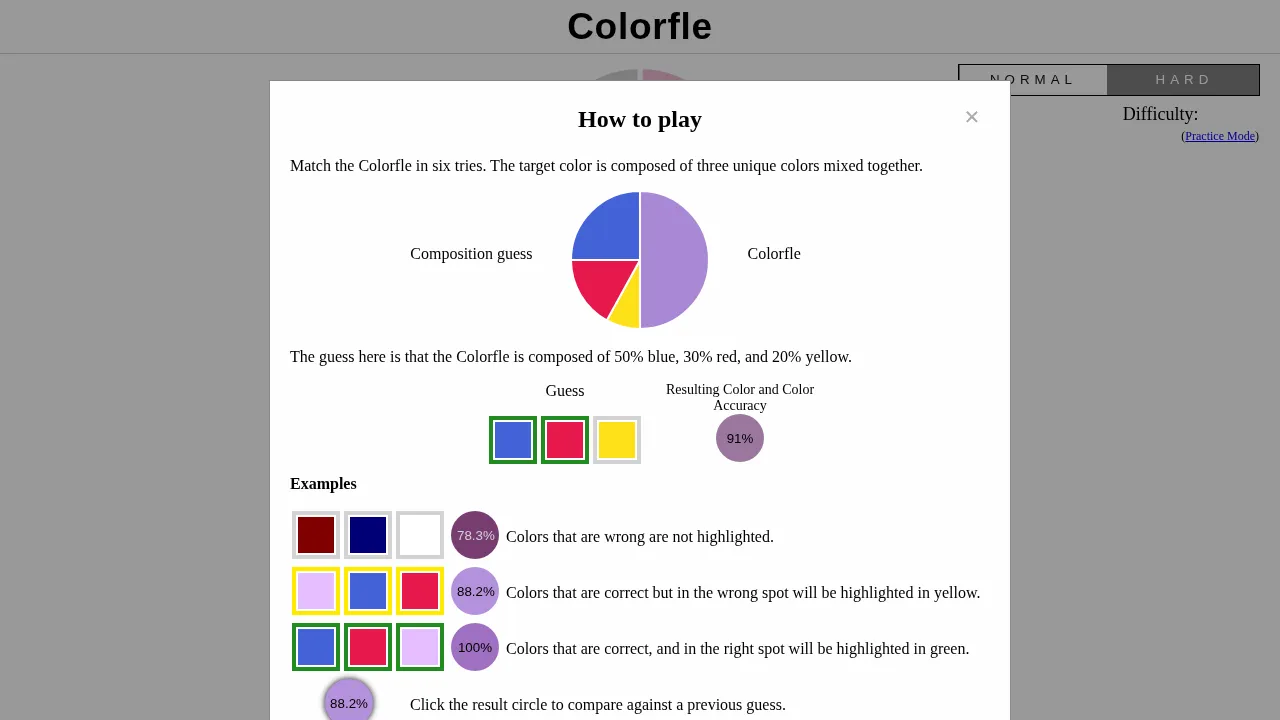 Colorfle Also palette
Six attempts to work out which three colours were mixed to make the one on screen.
- 3
 Prism 75 plays
Daily color gauntlet: 5 quick rounds, same for everyone each day. Match a hue on the color wheel, sort shuffled shades into a gradient, mix two paints blind, recreate a flashed color from memory, and make two hues equally light. Scored 0-100 with an emoji share trail, streaks and a practice trainer.
- 4
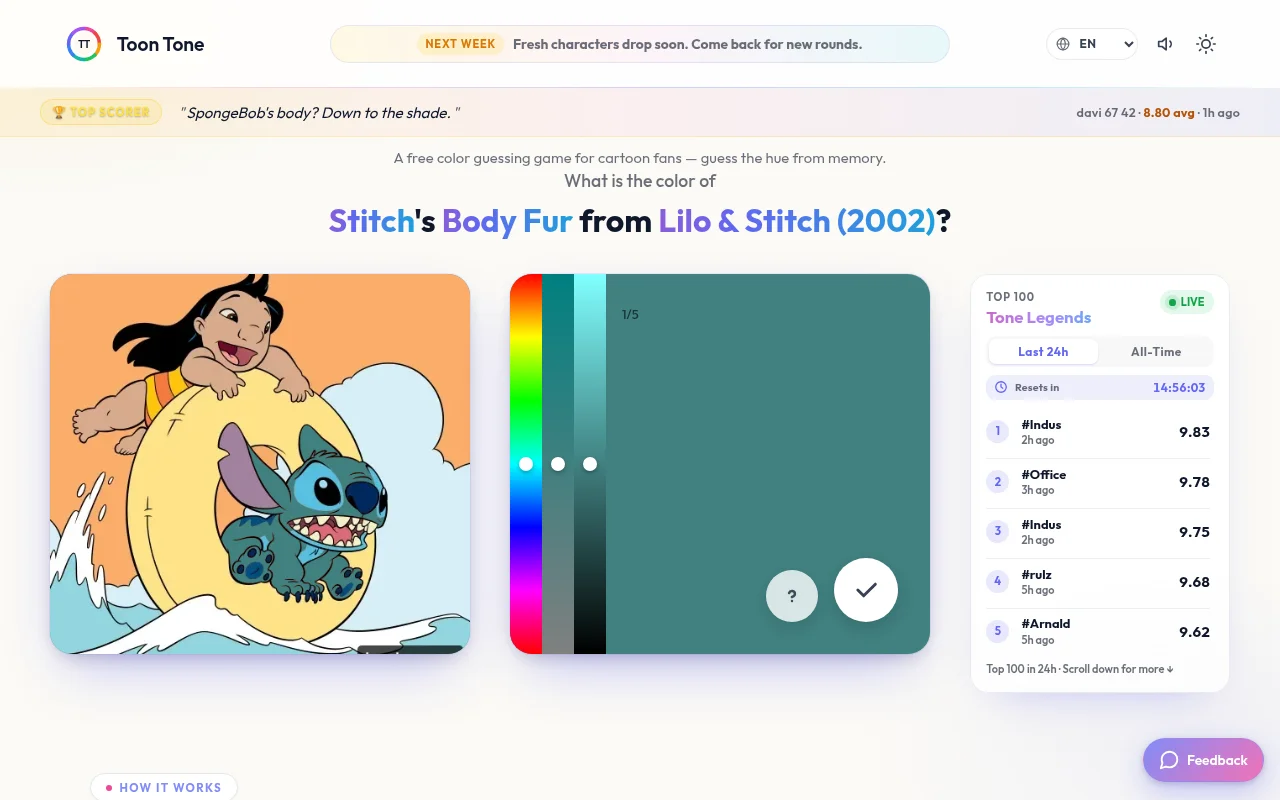 Toon Tone 50 plays
Recall a cartoon character's colour from memory, then rebuild it on HSB sliders across five rounds.
- 5
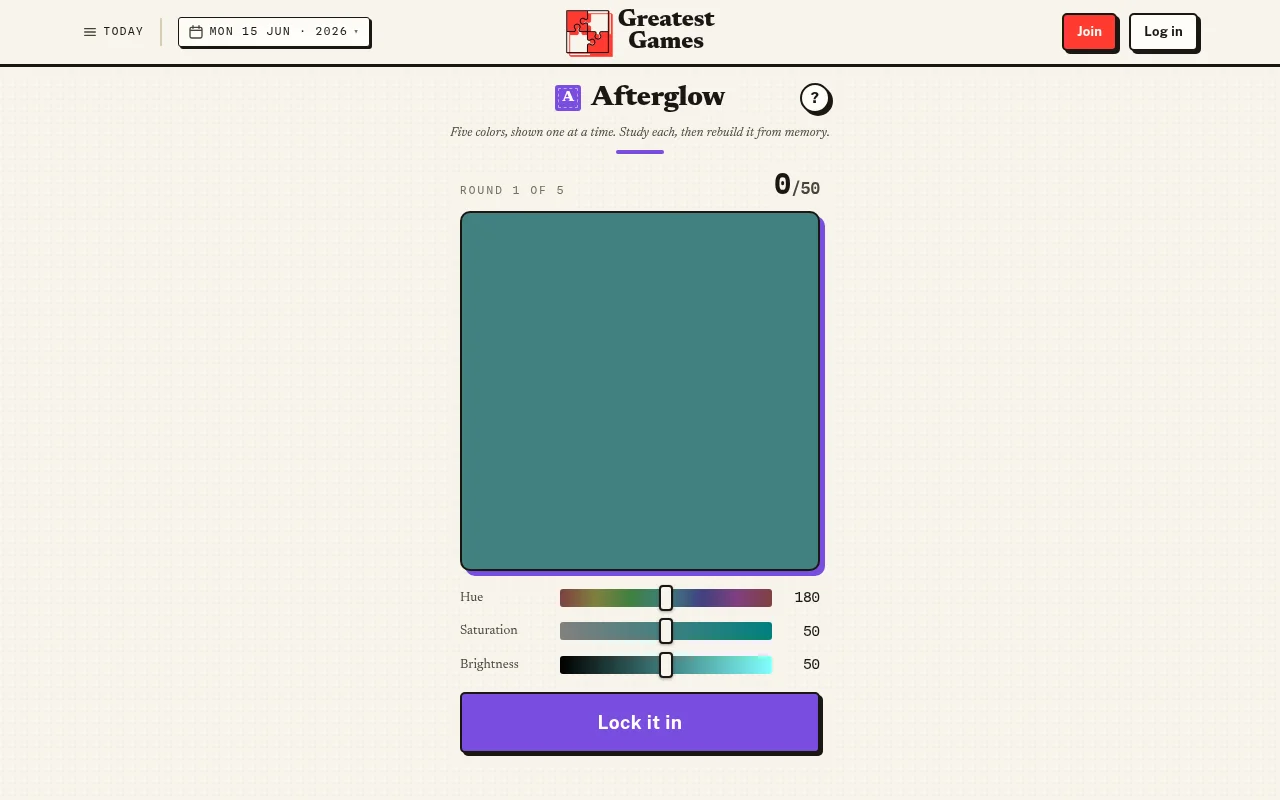 Afterglow 43 plays
Study five colours one at a time, then rebuild each from memory on hue, saturation and brightness.
- 6
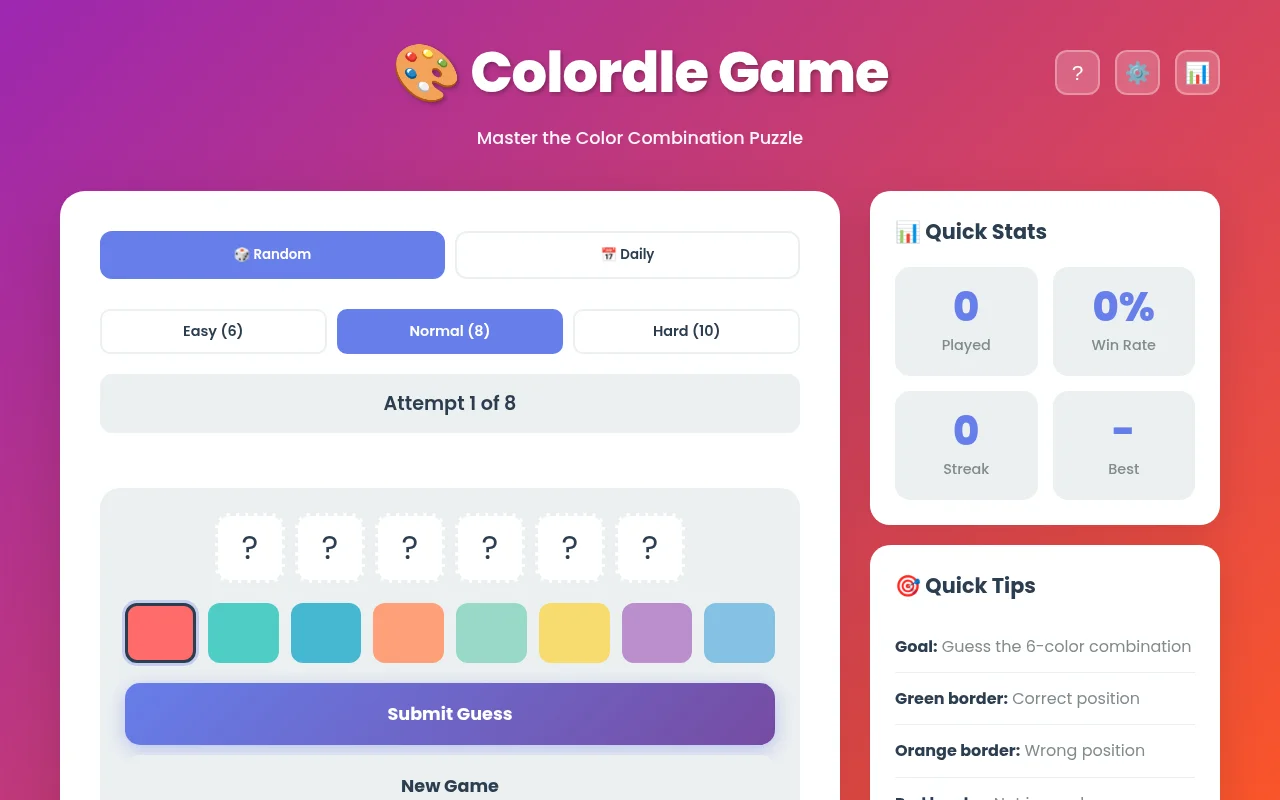 Colordle Game 31 plays
Mastermind played in colour: crack a secret combination of six.
- 7
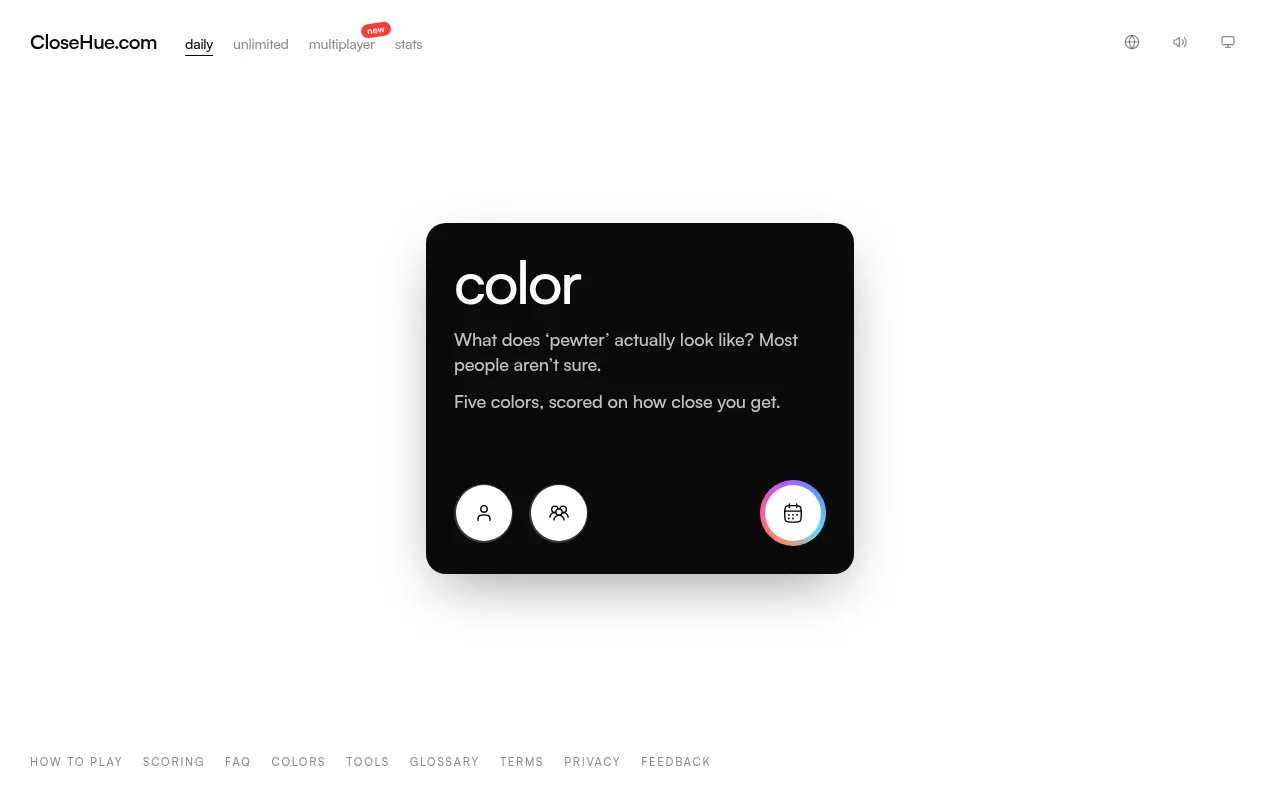 Close Hue 7 plays
Five named colours a day, matched by eye and scored on how near you got.
- 8
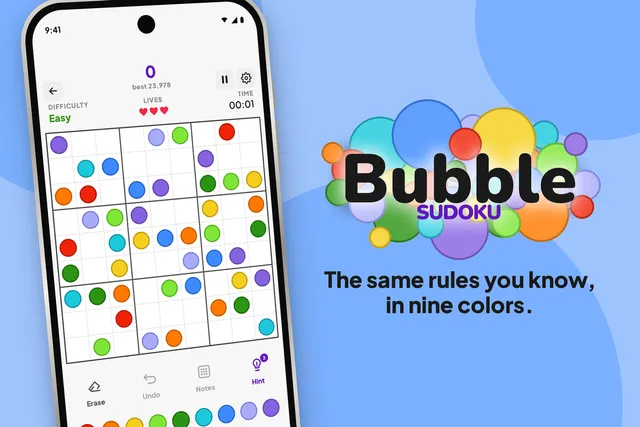 Bubble Sudoku 6 plays
Bubble Sudoku is a daily sudoku played with nine colored bubbles instead of the numbers 1 to 9. Classic 9x9 rules, one new board a day for everyone, and hints that teach the technique behind each move. Free in the browser with no account, and you can share your result without spoilers.
- 9
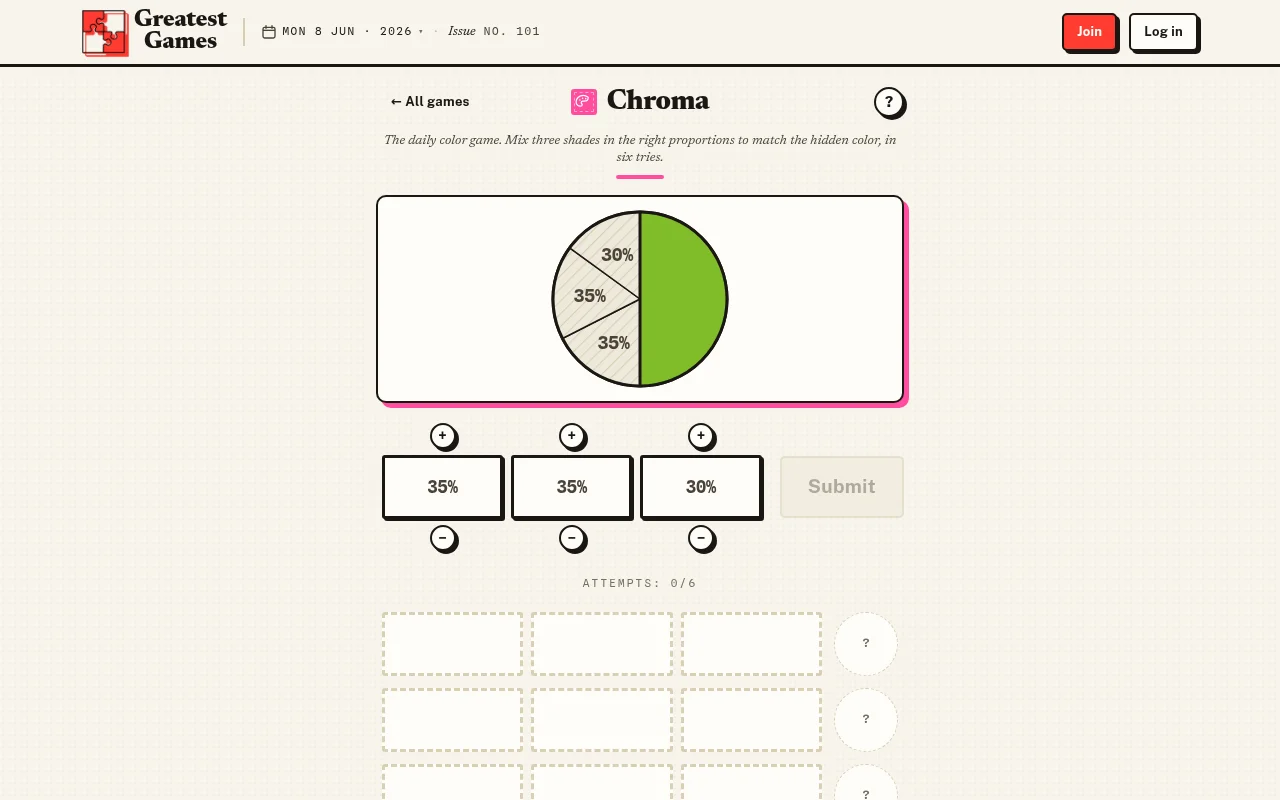 Chroma 5 plays
Mix three shades in the right proportions to match the hidden colour.
- 10
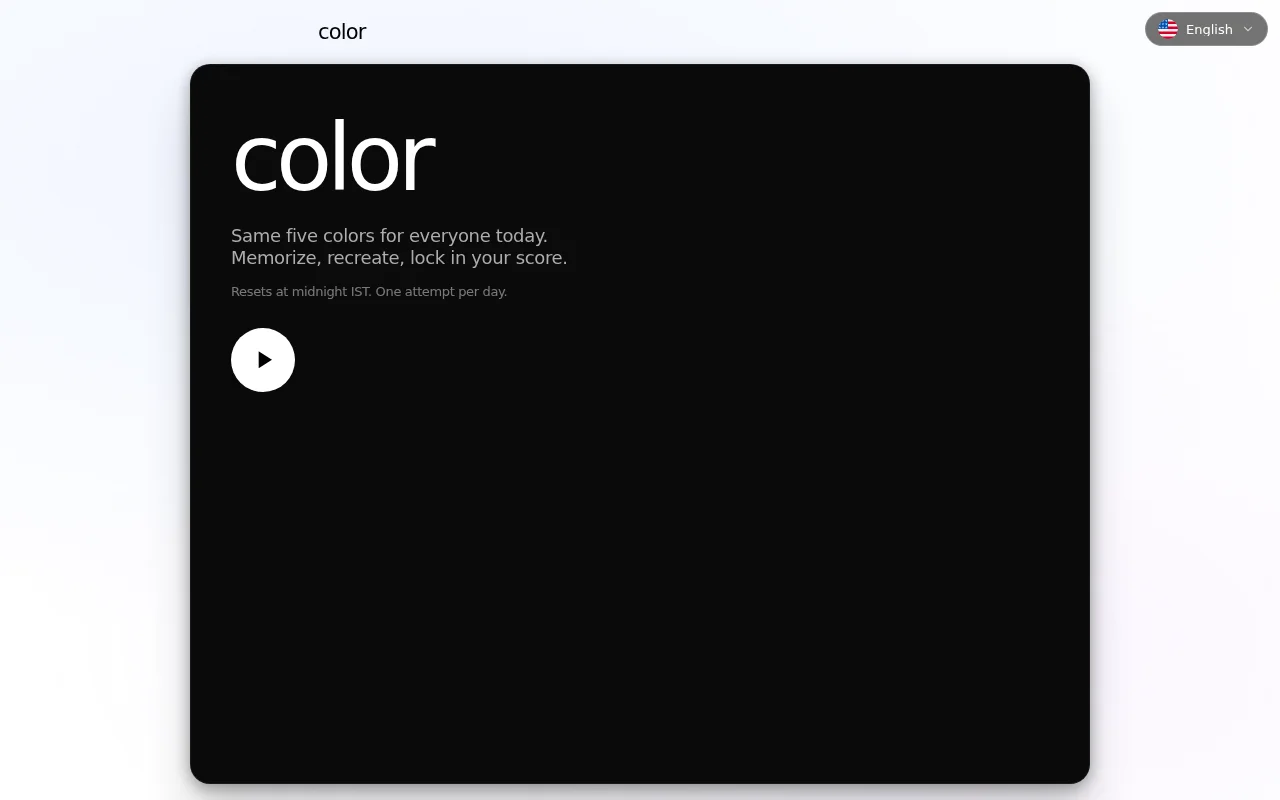 Dialed GG 4 plays
Memorize five colors, then recreate each one from memory with HSB sliders and Delta E scoring.
- 11
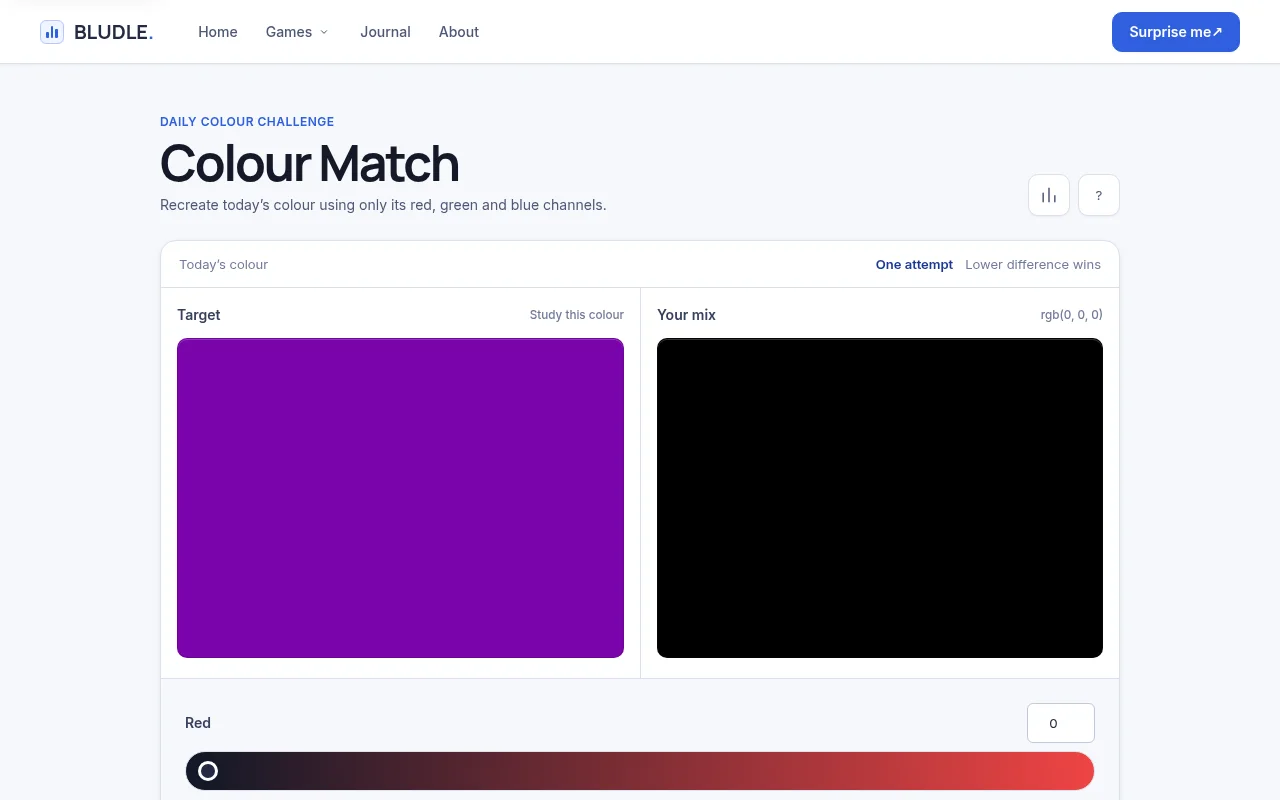 Colour Match 1 play
Recreate the daily target colour by adjusting red, green and blue values, then submit once to see how close your RGB mix is.
- 12
 Afterimage Another colors game
Study a colour, then rebuild it from memory with RGB controls across five daily rounds.
- 13
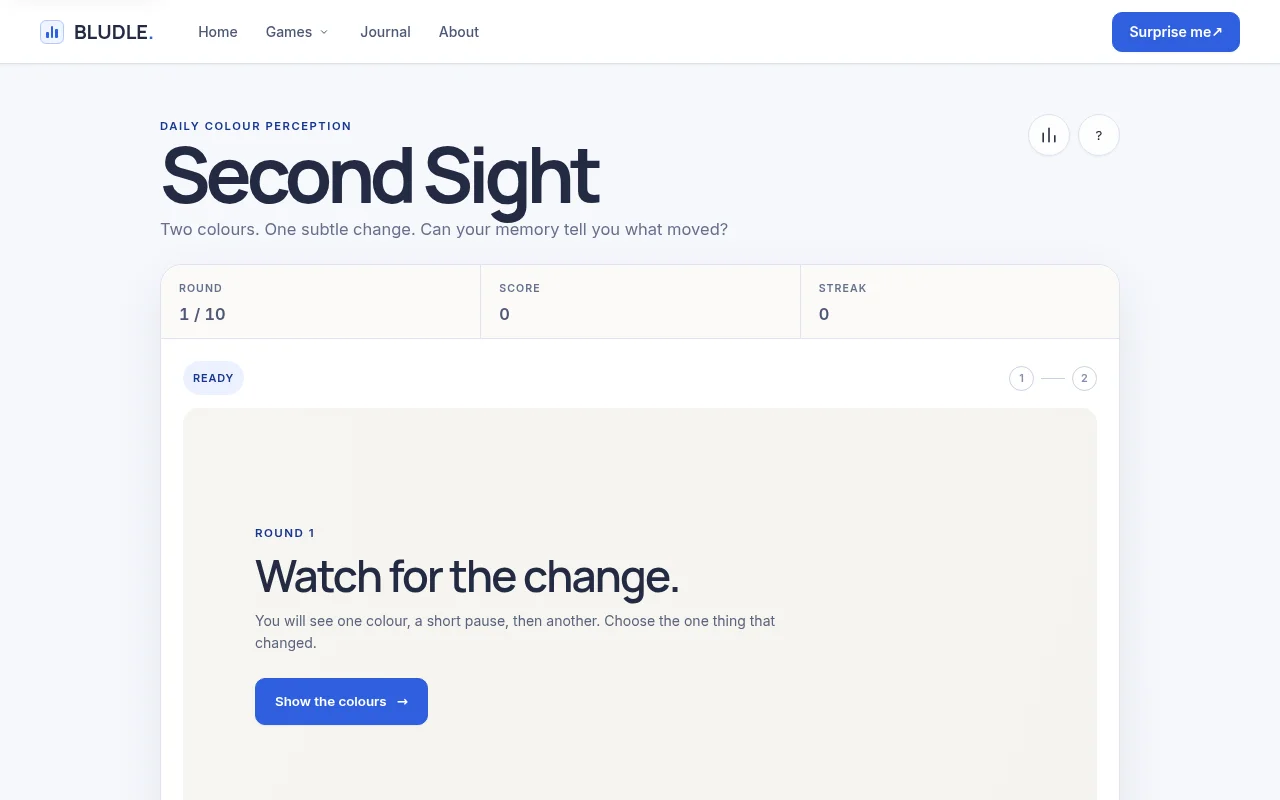 Second Sight Another colors game
Remember two fleeting colours and identify whether the second became brighter, darker or shifted in hue.